
Oregon Handicap Parking Placards: HandicapMD Introduces Eligibility and Medical Documentation Resource
Oregon guide explains Form 735-265, permit choices, clinical documentation, identity questions, and the government
Press Release Disclaimer: This is a press release distributed through the XPR Media network. It has not been independently verified by our newsroom.
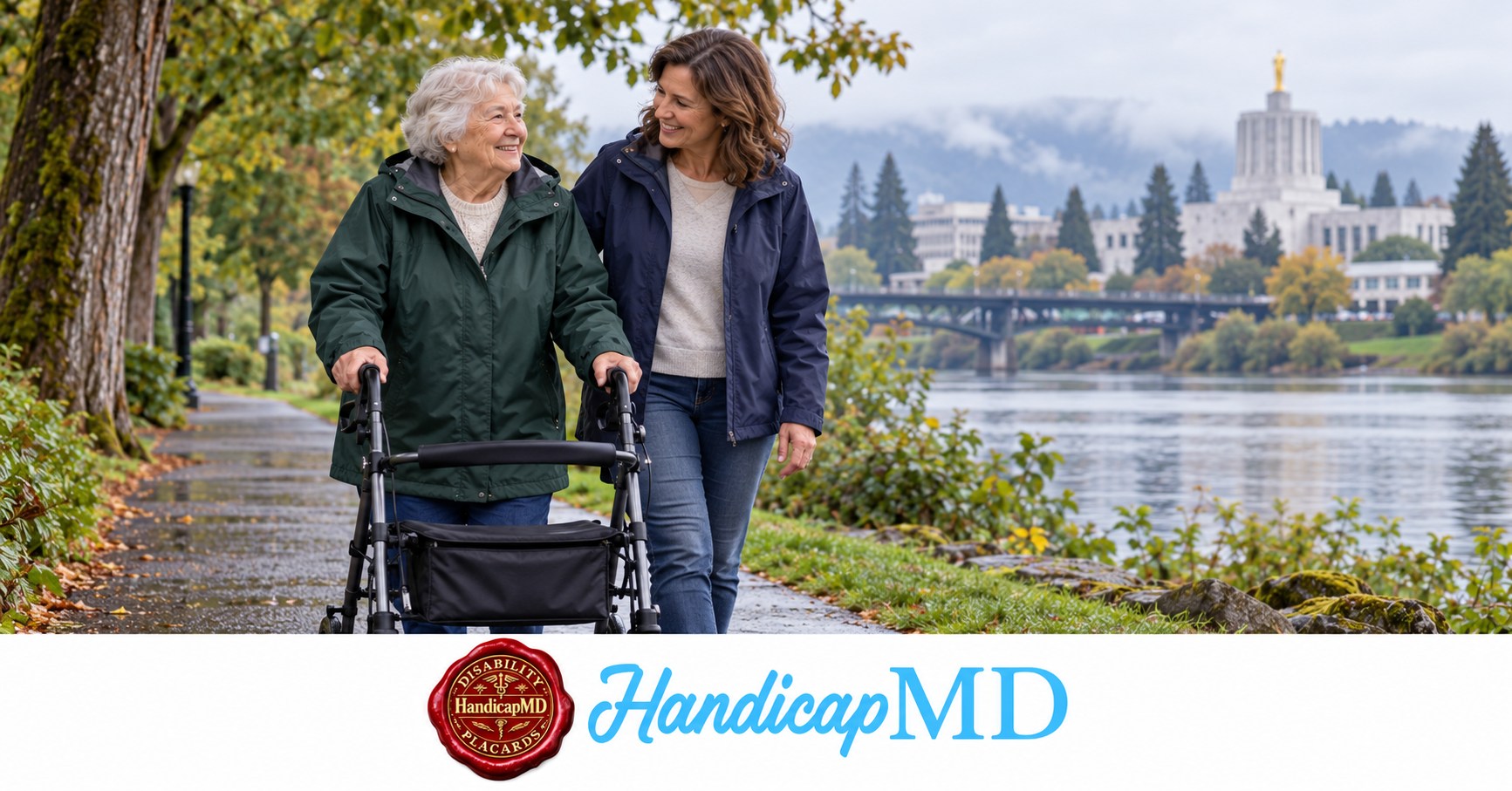

Oregon guide explains Form 735-265, permit choices, clinical documentation, identity questions, and the government application handoff.
SALEM, OR, UNITED STATES, November 4, 2026 /EINPresswire.com/ — HandicapMD is introducing an Oregon eligibility and medical documentation resource for residents preparing a disability parking application. The guide explains how current function, the selected permit category, and the required clinical certification fit into Oregon’s government process. It is intended to help applicants ask a more precise question than whether a diagnosis, a mobility device, or a previous permit automatically establishes eligibility.
The Oregon disability permit 735-265 form guide begins with Form 735-265 and the applicant’s actual circumstances. It connects medical evaluation preparation with the Oregon Driver and Motor Vehicle Services instructions for submission. The announcement concerns an educational resource; it does not claim a new Oregon credential, a change in state law, or government affiliation for HandicapMD.
Read the permit categories before choosing a box
Oregon’s Application for Individual Disabled Person Parking Permit Placard, Form 735-265, includes several request and permit choices. An applicant should identify the intended category and transaction before collecting signatures. A first individual request, a temporary need, and replacement of an existing unexpired permit do not all ask the same practical question.
Read both the application and its instructions. The category should reflect the supported situation rather than the option that sounds most generous. If a term is unfamiliar, ask DMV what it means for the requested credential. The medical professional can evaluate the relevant clinical finding without being expected to guess which administrative transaction the household intends to complete.
The application and certificate identify the same person
The form’s applicant section records the eligible person’s identity and contact details. Its certificate of disability records the professional assessment. Review the two together so that a clinician’s findings about one resident are not attached to another household member’s applicant information. This can matter when a caregiver owns the vehicle or handles the computer.
A passenger can have an application question even without being the driver. The driver’s convenience is not the medical basis of the request. If a helper completes fields, read the information back with the applicant and confirm how representative assistance or signing should be handled under the current instructions. Avoid guessing at an unfamiliar identification field.
An identification difficulty has a specific route
Oregon’s official application points to a separate parking identification card and permit pathway when obtaining ordinary identification through a field-office visit would be impractical or harmful. Residents facing that issue should review the actual DMV instructions rather than assume they cannot proceed or substitute someone else’s identification number.
Ask the agency which current document fits the person and what supporting information is required. A medical evaluator can address the clinical certificate, while the government office explains the identity process. The distinction helps a household direct its effort to the unresolved question instead of arranging another assessment when the immediate obstacle concerns an administrative record.
Describe the limitation in the context of daily travel
Prepare examples from ordinary journeys: reaching an appointment from a parking area, walking to an entrance, needing to stop, or depending on another person or a device. Describe what happens, what support is used, and whether the pattern changes. A clinician needs the person’s functional account, not only the name of a condition.
Do not create an unsafe demonstration to make the explanation sound persuasive. A person with treatment restrictions should follow those instructions while discussing what normally occurs. Existing records can help explain the limitation, and the evaluator can determine whether additional information is needed. An accurate description is more useful than a rehearsed statement designed to guarantee a result.
A wheelchair-related question deserves its own attention
The Oregon application includes a wheelchair-user finding. Applicants should ask how that category relates to their actual situation rather than treating a wheelchair symbol as a generic description of every parking permit. The form’s medical choices should be assessed by the authorized professional, with current government instructions available for interpretation of the requested credential.
A person may use different mobility supports in different circumstances. Explain that pattern honestly and ask the clinician which finding can be supported. Choosing a category does not certify that every entrance, transfer, or destination route will work. Destination access and the government credential remain related but separate planning subjects.
Temporary limitations and expected duration
Oregon’s application provides a temporary-disability option with a limited duration. A resident recovering from an injury or procedure can bring current restrictions, the relevant clinical plan, and information about reassessment. The professional determines what duration is supportable; the applicant should not select a maximum period simply to avoid future paperwork.
If recovery takes a different course, follow the current instructions for the next assessment and request. Do not change a printed expiration or assume an appointment confirmation extends an existing permit. A continuing symptom and an administrative continuation process are different matters, and the appropriate office should explain how to address the credential record.
Plan the evaluation around the actual medical question
An online appointment may be convenient, but the purpose remains an adequate individual assessment. Residents can visit HandicapMD to understand its evaluation pathway and confirm current professional availability for their request. A clinician may approve certification, need more information, recommend another assessment, or determine that the certification is not medically supported.
Before the visit, identify the form and category you want to discuss, organize relevant records, and write down a few concrete questions. Tell the service about communication or assistance needs. If a companion joins, explain the role the applicant wants them to have. Help with a device or appointment connection does not require the companion to replace the applicant’s own account.
Submission begins after document preparation
Oregon’s official form describes accepted delivery methods for the completed application. Check those current instructions for the transaction rather than assume that sending information to a private medical service also sends it to DMV. An evaluation, a signed certificate, and a received government application are distinct stages with different responsible organizations.
For electronic delivery, verify that the full saved document is readable and sent to the intended official destination. For paper delivery, include the pages and required supporting items. Keep the version actually submitted and any confirmation. If a medical section needs correction, ask the certifier to address it rather than independently changing a signed finding.
Replacement questions start with the existing record
A resident replacing an unexpired lost, stolen, or damaged permit should identify that transaction before arranging another complete medical evaluation. The application and current DMV guidance explain the relevant replacement route. An existing-record problem can differ from establishing initial medical eligibility, and the office should identify what information it needs.
Have the prior permit details or correspondence available if possible. Explain whether the issue concerns loss, damage, expiration, or a changed address. If the original is found after replacement, follow DMV instructions about its use or return. A recovered credential should not be treated as an extra authorization merely because it remains physically available.
Organize helpers without sharing every medical detail
An Oregon household may have one person arranging transportation and another assisting with forms. Agree who keeps the current application, who monitors correspondence, and how the applicant will review important messages. A concise administrative record can describe the next action without reproducing the complete clinical history for every helper.
Use the service’s designated channel for medical records and the government’s accepted route for the application. Avoid circulating filled documents in public groups to ask which box to select. A direct question to the relevant office or clinician can resolve a specific uncertainty while keeping personal information with the organization responsible for the task.
A hypothetical Oregon permit-selection example
Imagine a fictional resident who uses a mobility aid for some journeys and relies on a family member for transportation. They begin with an online search for a general disability pass. Reading the actual application reveals separate questions about the requested permit, the clinical finding, identity information, and how the completed packet will reach DMV.
The resident prepares ordinary walking examples for the clinician and asks the agency about an unclear administrative field. The helper keeps the current version and submission record. This example illustrates a preparation method, not an actual patient, a finding of disability, or an assurance that a particular category or delivery route will be accepted.
Consider the whole destination journey
The credential addresses parking under the applicable rules, while the visit may involve additional routes and assistance. Ask the destination about the entrance, seating, indoor distances, and return to transportation. Someone may need a workable plan while an application is pending or may still need support after a valid permit has been issued.
Record the actual location and answer rather than applying one facility’s arrangements everywhere. A clinic, civic building, hotel, or event venue may have different arrival instructions. The applicant should be involved in deciding what assistance they want and whether a proposed route fits their circumstances. A parking credential does not replace that practical conversation.
Find a useful next action
Travel-related categories should not be mistaken for an ordinary resident application
Oregon’s form includes temporary travel and foreign visitor selections alongside other permit types. A household should identify which circumstance actually applies before assuming that every route requires the same documentation. A resident renewing an individual credential, a visitor asking about a short stay, and someone replacing a missing permit can each have a different administrative question.
Ask DMV about the precise category and dates involved. Explain whether the person already has a credential, where it was issued, and what journey is planned. The agency can clarify which current pathway applies. A clinician should not be asked to create a certificate for an undefined travel benefit when the responsible office has not established what evidence, if any, is needed.
For a hypothetical family visit, begin by listing the actual transportation and destinations. One relative may provide airport pickup, another may handle appointments, and the visitor may use a mobility device throughout the stay. Those practical arrangements deserve planning independently of the credential question. Knowing who drives does not establish which Oregon permit category is correct, and a permit does not organize the assistance between destinations.
Save the agency’s answer with its context, including the requested category and travel circumstances. An instruction about one visitor should not become a blanket rule circulated to every future guest. Recheck current guidance when circumstances change. The same method can be useful for residents comparing ordinary and special categories: name the actual task, find the controlling instructions, and leave unresolved matters visible until answered.
The guide encourages applicants to avoid collecting documents simply because a category sounds relevant. Start with the official requirement and obtain clarification before asking a clinician or helper to repeat work.
The Oregon handicap parking placard overview brings the state application and medical evaluation pathway into one practical statewide starting point. Residents can review how certification fits their request, prepare questions about current function, and confirm the government filing instructions before treating a completed clinical visit as an issued permit.
HandicapMD is an independent medical evaluation service and educational publisher. Its Oregon resource aims to make individual questions easier to organize: what needs clinical assessment, which identity or permit field needs agency clarification, and who submits the completed application. The government authority retains responsibility for reviewing the request and issuing the official parking credential.
A concise current record can help the applicant coordinate each step.
About HandicapMD
HandicapMD provides online medical evaluations related to disability parking certification. When supported by the clinical assessment and applicable requirements, a licensed clinician completes the medical portion of the relevant application. The company’s educational resources explain state processes and help residents prepare questions. Government agencies retain responsibility for reviewing applications and issuing parking credentials.
https://www.handicapmd.com/
Crystal Dennon
HandicapMD
help@handicapmd.com
Visit us on social media:
Instagram
Facebook
YouTube
Get Oregon Handicap Parking Placard Online
Legal Disclaimer:
EIN Presswire provides this news content “as is” without warranty of any kind. We do not accept any responsibility or liability
for the accuracy, content, images, videos, licenses, completeness, legality, or reliability of the information contained in this
article. If you have any complaints or copyright issues related to this article, kindly contact the author above.

Media gallery

