Integrated Reinforcement for GRP: Exploring the Synergy of Roving, Woven Fabrics, and Polyester Netting
SHANGHAI, SHANGHAI, CHINA, August 19, 2026 /EINPresswire.com/ -- In a specialized composite workshop located along the
Press Release Disclaimer: This is a press release distributed through the XPR Media network. It has not been independently verified by our newsroom.

SHANGHAI, SHANGHAI, CHINA, August 19, 2026 /EINPresswire.com/ — In a specialized composite workshop located along the industrial corridor of Xuzhou, technicians are carefully layering materials into a large-scale mold for a high-performance chemical storage tank. The process requires more than just pouring resin; it demands a precise sequence of structural reinforcements. At the heart of this manufacturing cycle, the selection of the Roving, Woven Fabrics, and Polyester Netting Manufacturer dictates the final structural integrity and surface finish of the Glass Reinforced Plastic (GRP) component.
Shanghai Ruifiber Industry Co., Ltd., a high quality woven roving supplier based in China, has emerged as a critical partner in these environments by providing integrated reinforcement solutions that move beyond the limitations of single-material applications.
The Design Logic of Synergistic GRP Reinforcement
The mechanical performance of GRP is a result of how various reinforcement layers interact under stress. While resin provides the shape and environmental resistance, the internal fiber architecture manages the load. Industry experts recognize that relying on a single type of fiber often leads to compromises—either in weight, resin consumption, or crack resistance. RFIBER approaches this challenge through “synergistic design,” where different material formats are combined to create a composite that is stronger and more durable than the sum of its individual parts.
Instead of treating roving, fabrics, and netting as separate commodities, Shanghai Ruifiber Industry Co., Ltd. views them as a cohesive system. This integrated approach allows manufacturers to address specific weaknesses in GRP, such as interlaminar shear or surface micro-cracking, by layering materials with complementary physical properties.
Performance Specialization: The Three Pillars of Reinforcement
To understand the benefits of a synergistic approach, it is necessary to examine how different materials function within the composite matrix. RFIBER maintains a specialized production base in Fengxian, spanning over 20,000 square meters, to manufacture these distinct yet related components.
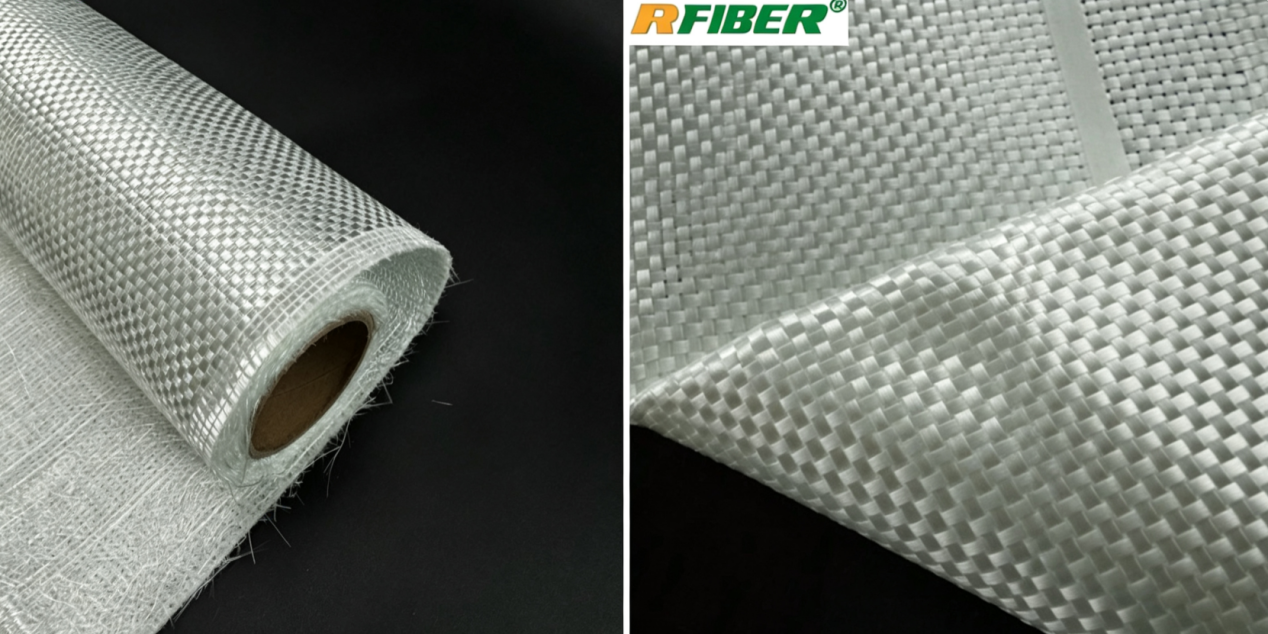
The primary structural skeleton is often composed of roving fabric. As a leading roving fabric supplier, RFIBER produces materials that offer high tensile strength and stiffness. These fabrics are essential for the main structural layers of large items like boat hulls or industrial piping, where the primary goal is to resist bending and impact forces. The heavy-duty nature of woven roving allows for rapid thickness build-up while maintaining a high glass-to-resin ratio.
Supplementing these heavy fibers is polyester netting, often referred to as laid scrim. This material serves a different but equally vital purpose. As a leading polyester netting factory, Shanghai Ruifiber Industry Co., Ltd. provides ultra-light, chemically bonded mesh that enhances interlaminar shear toughness. Unlike bulky fabrics, this thin netting provides a stabilizing effect between layers, preventing the “peeling” effect that can occur under cyclic loading. It also acts as a finishing layer to ensure surface smoothness and prevent the underlying fiber patterns from “telegraphing” through the gel coat.
Finally, composite felts act as the transition medium. These mats optimize resin flow during the infusion or hand lay-up process, ensuring that the bond between the structural roving and the stabilizing netting is seamless. This prevents the formation of air pockets or “dry spots” that could compromise the entire structure.
Achieving the 1+1+1 > 3 Effect
The true value of utilizing an integrated suite from a single provider like RFIBER lies in the balance of strength and toughness. When a high quality woven roving factory produces materials designed to work together, the result is a significant improvement in specific strength—the strength-to-weight ratio.
By strategically placing polyester netting between layers of heavy woven fabrics, manufacturers can reduce the overall amount of resin required. Resin is often the heaviest and most brittle part of a composite. Reducing resin volume through better fiber packing not only lightens the final product but also lowers material costs. Furthermore, the combination of different fiber orientations—unidirectional roving for load-bearing and multi-directional netting for crack suppression—ensures that the GRP product can handle complex stress profiles from various angles.
This compatibility extends to production methods. Whether a factory utilizes hand lay-up, pultrusion, or filament winding, the combination of roving and laid scrim can be tailored to the specific flow characteristics of the resin system used.
Solving Industrial Challenges Through Material Integration
In the marine and transportation sectors, the impact resistance of GRP is a constant concern. A boat hull reinforced solely with heavy roving might be strong but can be prone to surface cracking upon impact. By integrating polyester netting into the outer layers, RFIBER helps shipbuilders achieve a more resilient surface that absorbs energy more effectively, protecting the structural integrity of the vessel.
Similarly, in the production of industrial pipes and tanks, internal pressure creates hoop stress that requires the high-tensile capabilities of roving. However, these structures must also resist corrosion and micro-leaks. The addition of fine polyester mesh within the liner layers helps maintain a resin-rich, crack-free barrier that extends the service life of the equipment in harsh chemical environments.
In the building and construction industry, GRP panels are frequently used for cladding and roofing. Here, the challenge is maintaining aesthetic flatness and weather resistance. The use of laid scrim and composite felts prevents the structural roving from causing surface ripples, resulting in panels that are both architecturally pleasing and structurally sound.
From Material Supplier to Solution Architect
Since 2018, Shanghai Ruifiber Industry Co., Ltd. has positioned itself as more than just a manufacturer of industrial coated fabrics and hardware building products. By leveraging a highly skilled R&D team and state-of-the-art production processes, the company has transitioned into a solution provider.
The advantage of working with RFIBER is the consistency guaranteed by their modern manufacturing base. When all components of a reinforcement system—from the roving fabric to the polyester netting—come from the same source, the chemical compatibility of the sizing and binders is ensured. This reduces the risk of delamination or poor resin wet-out, which are common issues when mixing materials from disparate sources.
As the demand for more durable and efficient composite materials continues to grow in markets across Europe, North America, and the Middle East, the focus is shifting toward these sophisticated material combinations. By providing a comprehensive portfolio that includes roving, woven fabrics, and polyester netting, Shanghai Ruifiber Industry Co., Ltd. enables its clients to optimize their GRP products for the highest levels of performance and longevity.
For more information on integrated reinforcement solutions, visit: https://www.ruifiber.com/.
Shanghai Ruifiber Industry Co.,ltd
Shanghai Ruifiber Industry Co.,ltd
+ +86 18621915640
email us here
Visit us on social media:
LinkedIn
Facebook
YouTube
X
Legal Disclaimer:
EIN Presswire provides this news content “as is” without warranty of any kind. We do not accept any responsibility or liability
for the accuracy, content, images, videos, licenses, completeness, legality, or reliability of the information contained in this
article. If you have any complaints or copyright issues related to this article, kindly contact the author above.

Media gallery