Advanced Battery Energy Storage System Supplier: Qualtech’s Tech Insights
HANGZHOU, ZHEJIANG, CHINA, August 18, 2026 /EINPresswire.com/ -- As commercial and industrial facilities increasingly
Press Release Disclaimer: This is a press release distributed through the XPR Media network. It has not been independently verified by our newsroom.

HANGZHOU, ZHEJIANG, CHINA, August 18, 2026 /EINPresswire.com/ — As commercial and industrial facilities increasingly deploy high-capacity lithium-ion infrastructure to manage peak demand, the technical challenges of maintaining safety and cell longevity have moved to the absolute forefront of engineering priorities. In these multi-megawatt configurations, micro-level cell variances can quickly escalate into macro-level system vulnerabilities if left unchecked. Operational stability in modern infrastructure relies heavily on the depth and precision of the underlying management architecture.
Addressing these delicate technical demands requires highly specialized infrastructure control, a field where Zhejiang Qualtech Co., Ltd. has established a strong foundational presence. Established in 2011 and headquartered in Hangzhou, China, the company operates as a national high-tech enterprise and has been recognized as one of the third batch of specialized, refined, and new “little giant” enterprises by the Ministry of Industry and Information Technology. As a recognized Advanced Battery Energy Storage System Supplier, the company relies on its self-developed 3rd-Level Battery Management System (BMS) Architecture as a core technological foundation to build modern, stable, and highly secure battery energy storage systems (BESS).
The Core Blueprint: The 3rd-Level BMS Architecture
To manage the enormous volume of individual battery cells required for grid-scale and industrial applications, a structured, granular control mechanism is necessary. The traditional two-tier management systems often struggle with signal propagation delays and lack the localized processing power needed for massive cell arrays. To resolve this, Zhejiang Qualtech Co., Ltd. implements a decoupled, three-tier framework that divides responsibilities cleanly across three distinct hardware layers, ensuring high reliability up to high-voltage operational limits of 1500V.
The architectural hierarchy begins at the lowest physical layer with the slave battery management unit (BMU). This unit handles high-precision, real-time data collection directly from the individual cells, monitoring localized voltage fluctuations and surface temperatures. These raw data points are instantly passed upward to the second tier, the sub-master battery management unit (SBMU). The sub-master layer acts as a regional controller, executing complex module-level balancing strategies and filtering signal noise before communicating with the top tier.
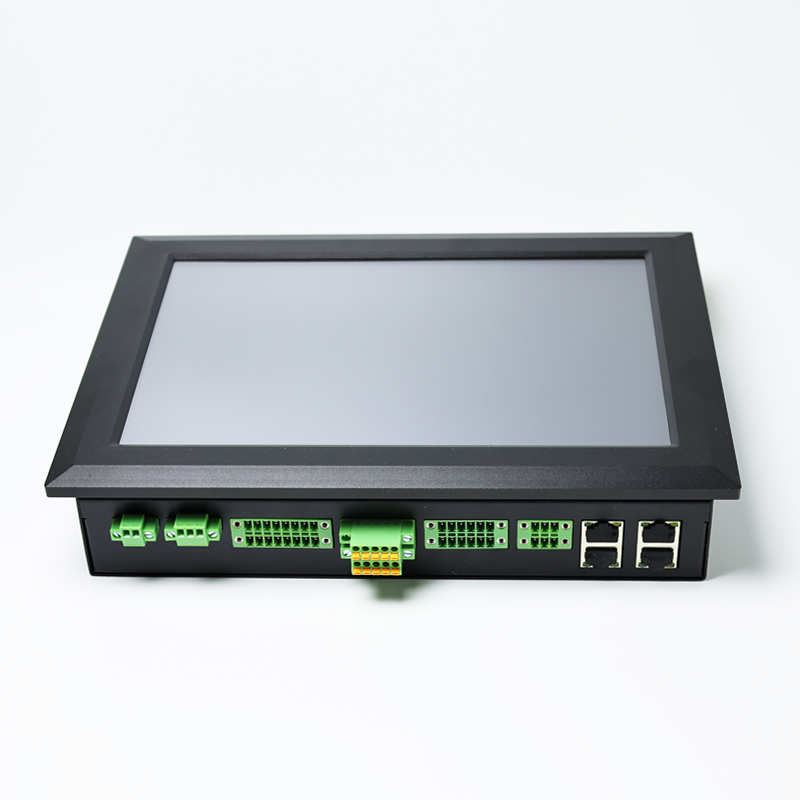
At the apex sits the master battery management system (Master BMS), represented by advanced hardware control units such as the QT-SEMU-5819B. This primary controller handles total system voltage, insulation monitoring, and high-level state-of-health algorithms. If a specific battery string exhibits an anomalous voltage curve, the regional sub-master can flag the issue and initiate targeted protection protocols without forcing a complete shutdown — delivering robust localized fault isolation through this segmented responsibility structure.
Unifying the Control Plane: Full-Stack 4S+C Synergy
Multi-vendor setups often create interface mismatches and latency. Qualtech resolves these integration friction points through a unified, full-stack 4S+C control ecosystem. Developed on a single shared platform, this architecture natively synchronizes the five core pillars of modern energy storage: BMS, EMS, PCS, TMS, and integrated cloud analytics.
For instance, when the thermal management system detects localized heat, it can act instantly — without polling a separate sensor network. The integrated control plane enables precise, real-time cooling adjustments, while the power conversion system modulates charging rates based on direct feedback from the master controller. This tight coordination ensures the entire container behaves as a single cohesive unit — eliminating data loss and cutting latency.
Precision Optimization: Active Balancing and Adaptive Algorithms
Over hundreds of charge and discharge cycles, minor variations in internal cell resistance and self-discharge rates inevitably lead to capacities drifting apart. Traditional passive balancing mitigates this simply by burning off excess energy as waste heat through resistors, which lowers overall system efficiency and adds to the thermal load within the enclosure. Qualtech addresses this long-term degradation through the implementation of dynamic active balancing, managed directly at the sub-master layer.
Rather than dissipating excess energy, the active balancing circuits redirect current from higher-capacity cells to weaker cells within the string during operation. This continuous redistribution of charge preserves total usable energy capacity and prevents individual cells from reaching premature over-voltage or under-voltage cut-offs.
Complementing this physical balancing is a highly accurate, adaptive state of health (SOH) estimation engine embedded within the Master BMS. Because battery degradation is a non-linear process influenced by temperature, discharge depth, and rest periods, static estimation models eventually drift from reality. The algorithms developed by Qualtech continuously adjust their internal parameters based on real-world operational cycles, ensuring high precision over the system’s entire life cycle. Furthermore, the master control hardware acts as an industrial “black box,” recording comprehensive high-frequency diagnostic logs. In the rare event of an operational anomaly, engineers can trace the exact voltage and thermal sequence leading up to the event, providing clear fault traceability.
Seamless Integration from Management to Physical Deployment
The 3rd-Level BMS Architecture and full-stack 4S+C control plane deliver their full value when scaled into complete turnkey hardware — from compact C&I cabinets to utility-scale containerized storage.
Whether a project requires an outdoor cabinet for peak-shaving or a multi-megawatt immersion-cooled container for grid stabilization, the underlying management topology remains identical: every system shares the same three-layer BMS framework and integrated thermal-power control loops. To date, cumulative shipments have exceeded 50 GWh for energy storage BMS, 3 million units for EV BMS, and 4 million units for smart lithium BMS — demonstrating scalability across demanding environments. This deployment record is backed by dual production bases in Hangzhou and Deqing, providing the specialized capacity to deliver complex integrated systems on schedule.
The versatility of this architecture is validated by real-world deployments across China’s most demanding environments. In Tibet, Qualtech supplied BMS and integrated storage systems to a 200 MWh solar-plus-storage project — a deployment on the high-altitude Qinghai-Tibet Plateau, where atmospheric pressure is significantly lower than at sea level, solar radiation intensity is among the highest in the country, and temperatures can swing sharply within a single day. These plateau conditions place distinct demands on energy storage equipment: reduced air density challenges the thermal management system’s heat dissipation efficiency, intense UV exposure accelerates material aging on exposed components, and the remote location means any maintenance visit requires extensive logistical planning. Project delivery verified the BMS architecture’s ability to maintain stable operation under the combined stresses of high-altitude electrical insulation requirements, wide temperature fluctuations, and grid-connected solar integration in an environment where consistent performance is essential and physical access is not guaranteed.
Structural Validation and R&D Infrastructure
Sustaining reliability across tens of gigawatt-hours of deployed equipment demands rigorous testing and continuous validation. Qualtech’s R&D team — comprising over 50% of its workforce — has secured more than 130 intellectual property rights, driving refinements in high-voltage safety, active balancing, and predictive diagnostics.
To bridge lab models and real-world deployment, the company has established joint research institutes with universities. This academic collaboration feeds into internal validation infrastructure that includes state-of-the-art EMC testing chambers and HiL simulation labs. Before mass production, every new master or sub-master board undergoes extensive HiL testing — simulating years of thermal cycles, grid faults, and communication dropouts within a controlled digital environment.
This strict focus on empirical data and rigorous quality management is validated by comprehensive international industrial certifications, including IATF 16949 for automotive-grade quality management, ISO 9001 for quality systems, and ongoing compliance advancements for ISO 26262 functional safety standards. Through this combination of structured multi-tier hardware, native full-stack control integration, and extensive empirical testing, Qualtech continues to deliver highly reliable infrastructure solutions tailored for the evolving complexities of modern industrial energy storage.
For detailed technical specifications regarding multi-tier management systems and complete containerized integration solutions, contact Qualtech’s engineering team to request a product brochure or schedule a technical consultation. Visit https://www.qualtechenergy.com/ for more information.
ZheJiang Qualtech Co.,Ltd.
ZheJiang Qualtech Co.,Ltd.
+ +86 15013692485
email us here
Visit us on social media:
LinkedIn
Facebook
TikTok
X
Legal Disclaimer:
EIN Presswire provides this news content “as is” without warranty of any kind. We do not accept any responsibility or liability
for the accuracy, content, images, videos, licenses, completeness, legality, or reliability of the information contained in this
article. If you have any complaints or copyright issues related to this article, kindly contact the author above.

Media gallery