Affordable used cars are vanishing: What $15K gets you in 2026 vs. 2019
Edmunds reports that affordable used cars are dwindling; in Q2 2026, prices have surged, with $15K now buying
Press Release Disclaimer: This is a press release distributed through the XPR Media network. It has not been independently verified by our newsroom.

merrymuuu // Shutterstock
Affordable used cars are vanishing: What $15K gets you in 2026 vs. 2019
For years, the used market served as a reliable alternative for first-time buyers, consumers looking to avoid steep new-car depreciation, and shoppers priced out of the new-car market. But second-quarter 2026 data from Edmunds shows a used market that has fundamentally repriced itself, and the entry level is where the squeeze is hurting consumers most.
That affordability shift begins with the traditional benchmark of the used market: 3-year-old vehicles.
Key takeaways:
- The average price for a 3-year-old used vehicle hit $32,461 in Q2, setting a new second-quarter record.
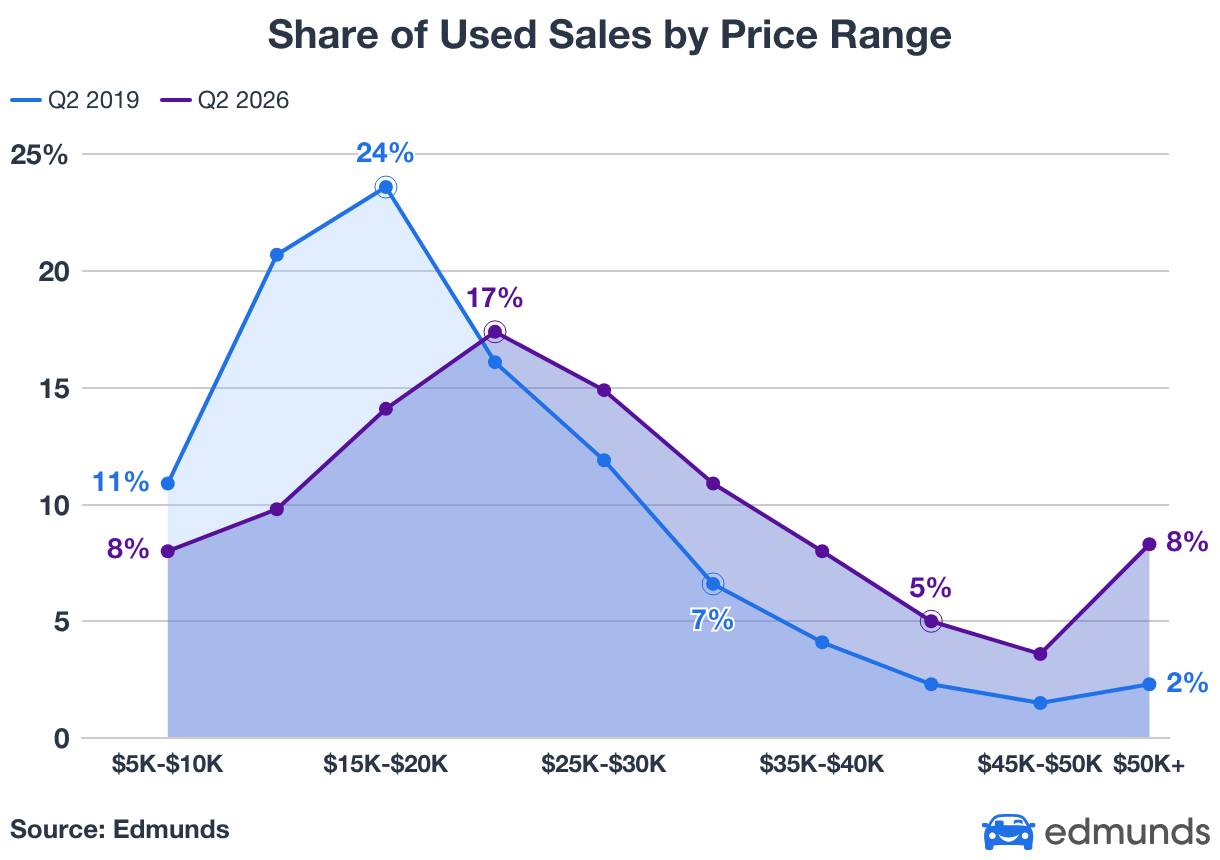
- Since Q2 2019, the share of used vehicles under $20K has fallen from 55.2% to 31.8%, while the share above $30K has more than doubled from 16.8% to 35.8%.
- The same $10K-$15K budget now buys a used vehicle that’s four years older and has nearly 40,000 more miles than it did in Q2 2019.
The state of the used vehicle market in Q2 2026
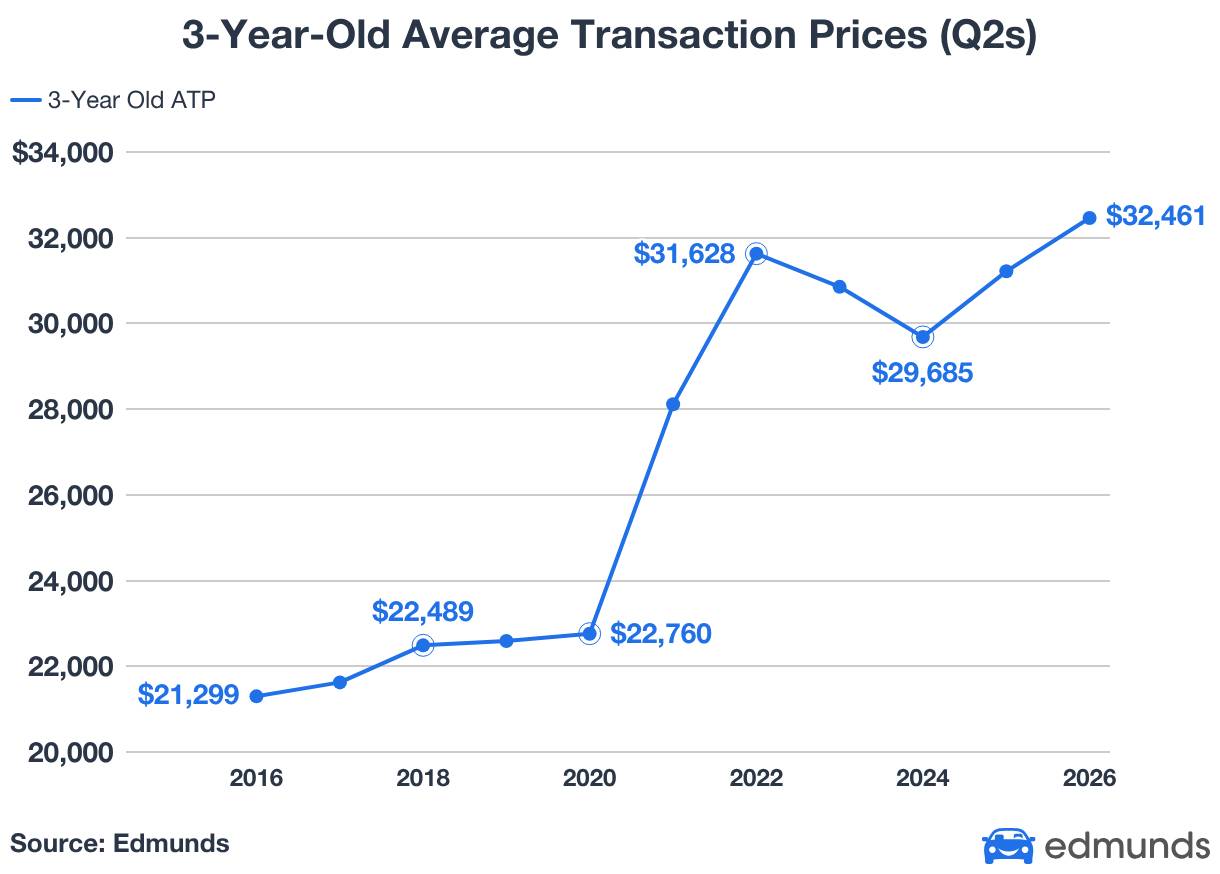
In Q2 2026, the average transaction price (ATP) of 3-year-old used vehicles hit a record second-quarter high of $32,461, up 4% from a year ago and 15.5% from Q2 2021, when pandemic-era supply constraints first began reshaping the used market.
Despite higher prices, 3-year-old used vehicles sold just as quickly as they did a year ago, spending an average of 38 days on dealer lots in both Q2 2025 and Q2 2026 — a sign that shoppers remain willing to pay record prices rather than wait for relief.
Edmunds
The shrinking sub-$20K used car market
The most striking shift in the used market is happening below $20,000.
In Q2 2019, vehicles sold for under $20,000 accounted for 55.2% of all used sales. In Q2 2026, that share fell to 31.8%. Other comparisons over the same period tell a similar story. The share of vehicles sold for under $15,000 was cut nearly in half, dropping from 31.6% to 17.8%, while the share of vehicles sold for $50,000 and above nearly quadrupled, growing from 2.3% to 8.3%.
These shifts aren’t simply the result of shoppers moving upmarket. They reflect years of price appreciation stemming from a drought of used inventory that has pushed many mainstream used vehicles into higher price brackets, leaving far fewer affordable options than were available just seven years ago.
Edmunds
What $15K buys today
The impact of higher used vehicle prices becomes even clearer when looking at what today’s budgets actually buy.
In Q2 2026, the average vehicle sold in the $10,000-$15,000 range was 8.7 years old and carried 98,222 miles. In Q2 2019, that same budget bought a 4.7-year-old vehicle with 58,250 miles. In other words, a $10,000-15,000 budget now buys a vehicle that’s four years older and has roughly 40,000 additional miles on the odometer.
The trend extends across every affordable price range in the used market. In the $15,000-$20,000 price range, the average vehicle age has climbed from 3.4 years to 6 years, while the average mileage has climbed from 41,851 to 71,192. Even vehicles priced between $5,000 and $10,000 are getting older, with the average age rising from 8.1 years to 10.7 years and typical mileage now exceeding 120,000 miles.
The most affordable used vehicles also continue to sell quickly. Vehicles sold between $5,000 and $10,000 spent an average of just 25 days on dealer lots in Q2 2026, the fastest of any price range and well ahead of the 44 days it took to sell a used vehicle priced above $50,000. For shoppers, that means well-priced, affordable vehicles often don’t stay on the lot for long, leaving little time to wait for a price drop or negotiate a better deal.
Brand matters more than ever
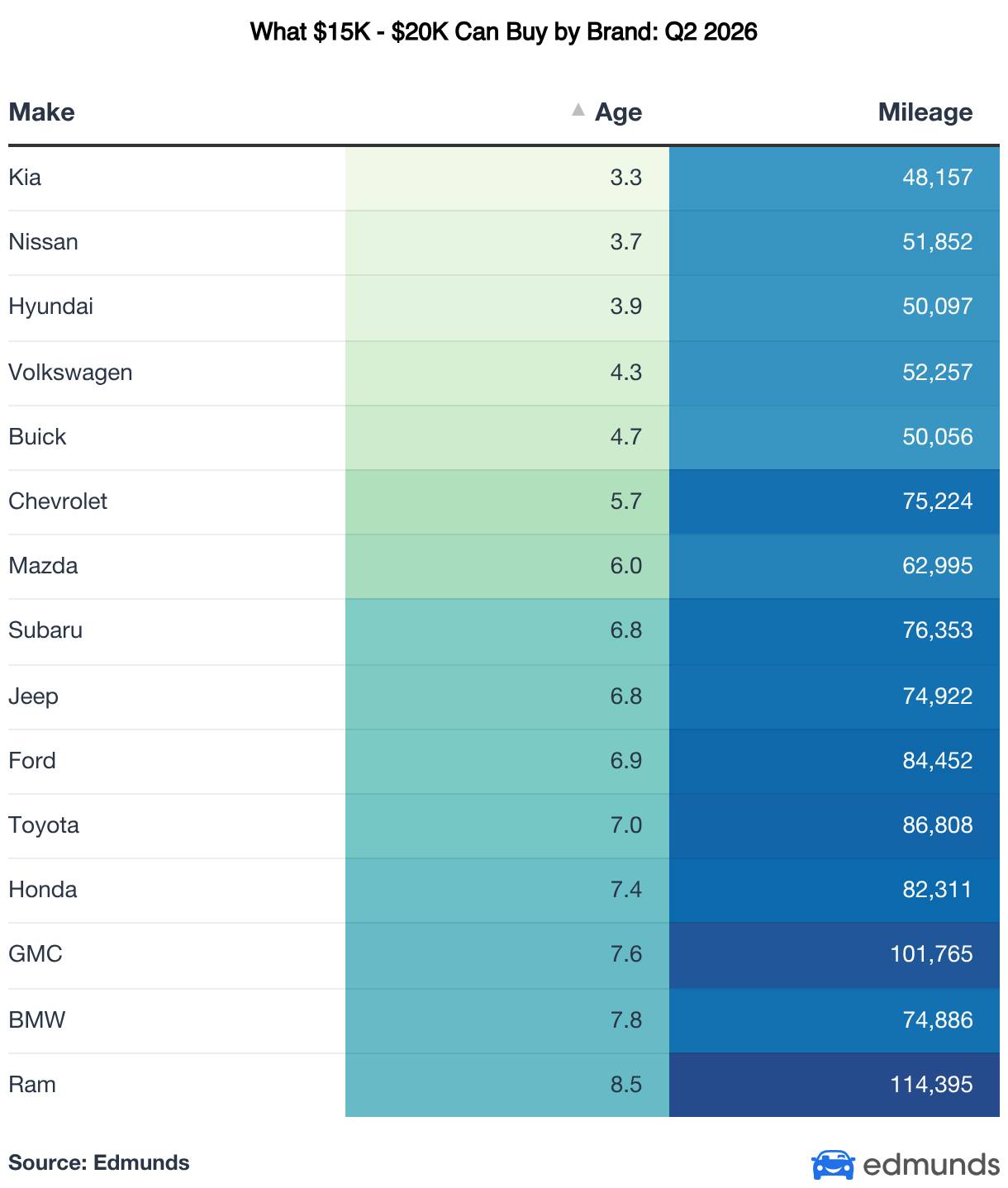
For used-vehicle shoppers, brand choice has never mattered more. The same $15,000-$20,000 budget can buy dramatically different vehicles depending on the badge, with meaningful differences in age and mileage across brands.
Edmunds
Analyzing the top 15 most frequently purchased brands in the $15,000-$20,000 price range, shoppers can choose between a 3-year-old Kia with under 50,000 miles and a 7-year-old Toyota with more than 85,000 miles. Neither choice is inherently better, but the trade-offs are significant.
Brands with stronger resale values, along with many luxury brands with long-tailed depreciation, command higher prices on the used market. As a result, lower-priced inventory from those brands tends to skew significantly older and higher in mileage than similarly priced vehicles from brands that depreciate more quickly or have lower starting prices. Shoppers willing to consider a Kia, Hyundai or Nissan may find significantly newer vehicles at the same price point, sometimes with coverage from a factory warranty still remaining.
Conventional wisdom to “just buy a used Toyota” comes with trade-offs in today’s market. For many shoppers, a newer, lower-mileage vehicle from a brand that depreciates more quickly may offer better overall value, particularly when factoring in a remaining warranty, fewer near-term repair needs, and more modern safety features.
Strategies to get a good used vehicle
Finding a good used vehicle takes a different approach than it did just a few years ago. These three strategies can help shoppers get the most for their money:
Be prepared to move quickly. Affordable vehicles are selling in under a month, and the best-priced ones often sell even faster. Get preapproved for financing before you shop so you can act when the right car appears.
Stay flexible on brand. Brand premiums are real. Expanding your search beyond the usual reputation leaders can get you a newer vehicle with fewer miles and sometimes remaining factory warranty coverage for the same money.
Shop the total cost, not just the sticker. An older, higher-mileage car from a prestige brand may cost more to insure, maintain and repair than a newer alternative. Compare the total cost of ownership before deciding.
This story was produced by Edmunds and reviewed and distributed by Stacker.