GeoMe Offers Curbside Pickup as Virtual Drive-Thru Alternative Without Construction Costs
As cities restrict new drive-thru lanes, GeoMe says its platform delivers the same service model using existing staff
Press Release Disclaimer: This is a press release distributed through the XPR Media network. It has not been independently verified by our newsroom.
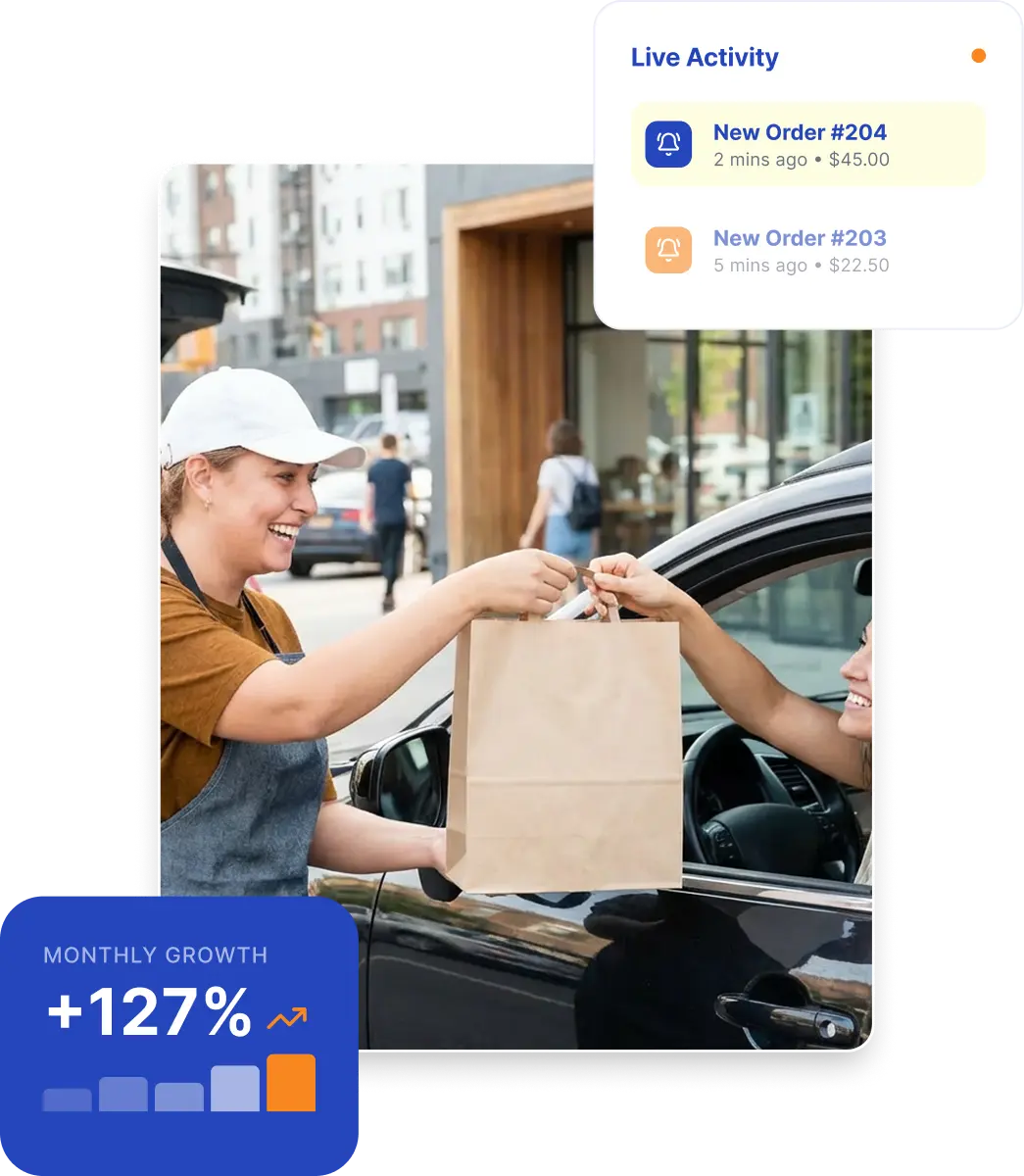

As cities restrict new drive-thru lanes, GeoMe says its platform delivers the same service model using existing staff and parking, with no paving or permits.
GA, UNITED STATES, August 29, 2026 /EINPresswire.com/ — GeoMe has positioned its Curbside Pickup platform as a software alternative to drive-thru construction, allowing businesses to serve customers in their vehicles without building a lane, a window or a stacking area.
The company describes the model as a virtual drive-thru. A customer orders and pays in advance from an app or a mobile browser, drives to the business, and is detected automatically on arrival by geofencing. Staff carry the order out to the vehicle. The functional outcome matches a drive-thru window: the customer never gets out of the car. The difference is that the lane is a parking space, the menu board is a phone, and the intercom is an internet connection.
The financial gap between the two approaches is substantial. Industry construction estimates put the cost of adding a drive-thru lane to an existing site at roughly $35,000 to $80,000, with most of that going into paving and striping, and note that traffic flow modifications usually require separate approval from local authorities. A ground-up quick-service building with a single drive-thru lane is commonly budgeted between $1.3 million and $2.5 million.
For many businesses the question never reaches the budget stage, because the permit is not available. Minneapolis banned new drive-thru windows citywide in 2019. Atlanta followed in 2023 with a ban on new drive-thrus within half a mile of the Beltline. Comparable ordinances have passed in Long Beach, California; Creve Coeur, Missouri; and Fair Haven, New Jersey, generally citing vehicle emissions, litter, pedestrian safety and walkability. San Luis Obispo, California has prohibited drive-thru windows since 1982.
Demand has moved in the opposite direction. National Restaurant Association material on the trend reports that around 75% of restaurant traffic is now off-premises, and that drive-thrus account for 51% of that off-premises traffic.
“There’s a service model that a huge number of customers clearly prefer, and for most independent businesses it has been locked behind a construction project,” said Rami Smair, Founder and CEO of GeoMe. “A cafe with eleven parking spaces is never building a lane. A pharmacy in a strip mall is never getting that permit. But strip a drive-thru back and it is only three things: somewhere for the car to stop, a way to take the order and the payment, and someone to carry the order out. Those businesses already have all three. The parking space is the lane. The customer’s phone is the menu board and the intercom. A staff member walking out is the window.”
Not a replacement for an existing drive-thru
GeoMe says the platform is frequently misread as competing with physical drive-thru infrastructure, when in practice it tends to relieve it.
A drive-thru lane is a single-file queue with a fixed throughput and a hard limit on how many cars can stack before the line spills into traffic. It handles small, simple, repeatable orders well. It handles a fourteen-item family order, a custom request or a large catering pickup badly, and one such order can stall every vehicle behind it.
Businesses that already operate a lane can route those orders to curbside instead, effectively adding a second lane that requires no land. The physical lane keeps moving, and the orders that would have blocked it are handled in parking spaces that were sitting empty.
Not a replacement for delivery
The company draws a similar distinction with third-party delivery. Delivery serves a customer who is not leaving the house. Curbside serves a customer who is already out, already driving and already passing the business. They are different occasions, and they carry different economics: delivery adds courier cost and commission, while curbside asks the customer to travel and returns a larger share of the ticket to the business.
“We’re not asking anyone to switch anything off,” Smair said. “Keep the lane, keep the delivery apps. Those channels reach people this one doesn’t. The point is that a business shouldn’t need a construction budget to serve the customer who is already parked outside.”
The question of the missed impulse buy
The most common objection GeoMe encounters from retailers is that a customer who never enters the store never walks past the display, and the add-on sale is lost. The company says the concern is legitimate and answers it in two parts.
The first is that the comparison is usually drawn incorrectly. The relevant alternative for many of these customers is not an in-store visit with a fuller basket. It is no visit at all, which is a basket of nothing.
The second is that digital merchandising is not a weaker version of a shelf display, it is a differently shaped one. The platform can surface daily specials, prompt add-ons at the point of checkout, and offer one-tap reordering of a customer’s previous purchase. A shelf cannot remember what somebody bought last Tuesday.
“A physical display shows the same thing to everyone who walks past it,” Smair said. “A checkout screen can show a customer the item they buy every week and forgot today. Neither one is better in the abstract. But it’s not true that the digital version has nothing to sell with.”
The platform runs on devices a business already owns, requires no specialist hardware, and can be set up in under an hour. The first 10 orders each month are free with no credit card required, and billing after that is month-to-month with no contract.
About GeoMe
GeoMe is the company behind Curbside Pickup, an order-ahead and pickup technology platform for counter-service businesses. The platform supports curbside handover, in-store pickup, table ordering and counter pickup, with automated geofence arrival notifications, integrated payments and business reporting. It is used by restaurants, cafes, pharmacies, grocers, florists, butchers, fishmongers, liquor stores, pet supply and auto parts retailers, mobile food trucks and other businesses that hand goods across a counter. Curbside Pickup and Curbside Pickup Business are available on iOS and Android, and customers can also order through any mobile browser.
https://www.curbsidepickup.io/
Amira Smair
GeoMe
email us here
Visit us on social media:
LinkedIn
Instagram
YouTube
Legal Disclaimer:
EIN Presswire provides this news content “as is” without warranty of any kind. We do not accept any responsibility or liability
for the accuracy, content, images, videos, licenses, completeness, legality, or reliability of the information contained in this
article. If you have any complaints or copyright issues related to this article, kindly contact the author above.

Media gallery